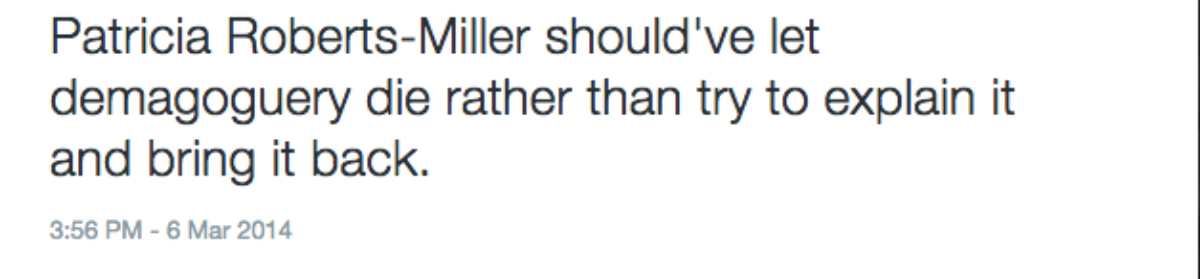

I’ve been writing about demagoguery for twenty years, and I think just today I’ve figured out how to explain something that has long bothered me about the “demagoguery is an appeal to emotions” notion. In addition to the problems I’ve mentioned before—that assumes it’s possible to have a stance on politics that is devoid of emotion (a person who didn’t care about anything would have no basis for preferring one outcome over another and hence no policy preferences), the rational-irrational binary is itself irrational, people should be emotional about politics—there is a performative contradiction in saying that demagoguery is bad and demagoguery is emotional.
Many of the condemnations of demagoguery that assume the problem is that it’s an emotional appeal talk about the dangers, immorality, damage, and threats that a specific demagogue presents—they appeal to fear. And many of them are pretty dang emotional in doing so. Often by “emotional rhetoric” people mean style or tone (e.g., highly figurative language, especially such figures as hyperbole, superlatives, binaries). But, it’s quite possible (and often very moving) to make a fear-mongering irrational argument in plain style and an “unemotional” tone.
More important, the identification of someone as a demagogue tends to be grounded in emotion; that is, whether they like or dislike the rhetor and/or the rhetor’s agenda. Only out-group rhetors are demagogues.
So, if emotions are bad in public discourse, and appeals to emotion are demagogic, then it’s always demagogic to call someone a demagogue.
And that’s why I think we should focus on demagoguery rather than demagogues, and why I have a chapter in the book on demagoguery about Earl Warren’s very unemotional tone.