
Recently, yet another scholar used me as an example of someone who says that demagoguery is always bad, while acknowledging that I explicitly say it isn’t. Today, a friend asked me whether Mamdani’s speech was demagoguery, since there does seem to be an us v. them. So, she asked, is demagoguery sometimes necessary for in response to demagoguery?
At base, there is the same question: is demagoguery always bad? And, as I’ve often said, the answer is no. What I say is:
Demagoguery isn’t a disease or infection; it’s more like algae in a pond. Algae can be benign—in small amounts, even helpful. But if the conditions of the pond are such that the algae begins to crowd out other kinds of pond life and ecological processes, then it creates an environment in which nothing but algae can thrive, and so more algae leads to yet more. (79)
(Also, a pet peeve is that scholars, in scholarly articles, don’t look at my scholarly version of the argument. Sheesh.) Granted, I assumed too much as to what folks knew about algae—it is necessary in a pond. So, the answer is right there: demagoguery is not always bad; it can be good, and it can be benign.
But that leads to the question: when is it benign, and when is it good?
Before I go there, though, I should first point out that it’s easy to over-identify demagoguery. What’s important about the various characteristics I’ve argued constitute demagoguery is that they’re each necessary but not sufficient. (I really wish we explicitly taught that concept—if people were more familiar with that concept, so many bad arguments would evaporate rather than persuade.) So, for instance, someone talking about Us, or Them, isn’t necessarily demagogic/demagoguery. The us v. them of demagoguery is a binary that claims to capture all possible identities into a homogeneous Us and an equally homogeneous and essentially hostile group (Them) determined on the political, civil, or physical extermination of Us.
These two groups are defined by double negation. The “Us” is the group of people hostile to Them, and Them is the group of people not Us.
That’s a confusing sentence (because I’m trying to describe a way that people are confused about politics). Imagine that Chester believes that there are two kinds of dogs: Us (dogs who hate squirrels) and Them (who are allies of squirrels). What is the proof that some dog is “Them”? That the dog is not fanatically opposed to squirrels and to anyone who doesn’t hate squirrels.
In the most worrisome form, the “us” is a group fanatically determined on the political, civil, or physical extermination of Them because They are already essentially and implacably determined on our extermination. So, any action, including preventive war, violating all the principles we claim to hold, or whatever, are justified “self-defense” based on nutpicking (using the most extreme or fringe members/statements to characterize the whole group), and/or hypotheticals (what They will do if they get the chance), projection and/or scapegoating.
So, condemning a politician (Snorg) for advocating Soviet-style communism, and saying that person is so dangerous that no one should vote for them, is not demagoguery iff Snorg really is advocating Soviet-style communism, and not some sloppy guilt by association smearing of categories. If Snorg’s policies fit the criteria set by the majority of scholars of Soviet-style communism, then, as much as that characterization might hurt the feelings of Snorg’s followers, or feel like an insult, it isn’t demagoguery.
Further, it isn’t demagoguery for critics of Snorg to condemn Snorg’s supporters for being Soviet-style communists. It isn’t demagoguery to criticize people—even vehemently—for supporting policies they actually support. If, however, Snorg’s major opponent, Flurb, characterizes the political situation as either pro-Flurb or Soviet-style communism, there are potentially problems—that is, a rhetoric of “you’re either fanatically committed to me, or you’re a Soviet-style communist.” That’s almost certainly a false binary; hence, probably demagogic.
FDR’s speech calling for war against Japan, which had already declared war on the US, was not demagoguery. It wasn’t rational-critical argumentation either, but that genre never is, and doesn’t need to be. Similarly, Churchill’s WWII speeches weren’t demagoguery (at least not the ones I’ve read) for two main reasons. First, neither Churchill nor FDR engaged in projection or scapegoating. They were condemning the self-declared enemy for what the enemy had done or was doing. Second, they were accurate in their attribution of responsibility. They talked about Hitler, the Nazis, Japan, Germany.
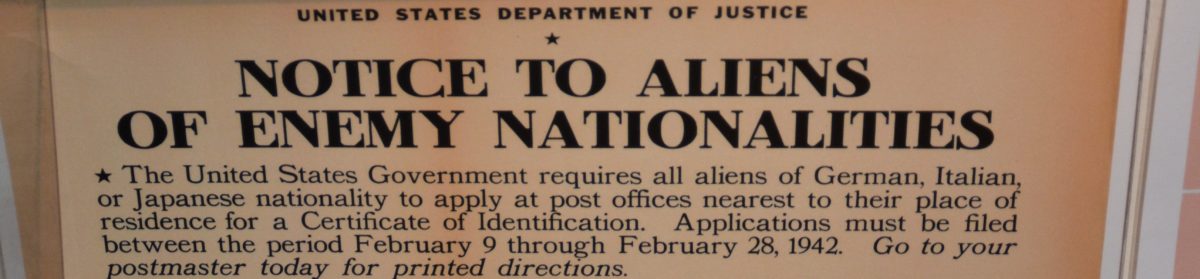
For instance, when FDR referred to “the Japanese” he didn’t mean some vague out-group; he meant, and said, Japanese troops, representatives, forces, political figures—people who were knowingly acting on behalf of the nation-state of Japan. When Earl Warren talked about “the Japanese,” he meant an undefined and villainous out-group, scapegoated for Pearl Harbor, and on whom all sorts of evil traits could be projected. It was demagoguery. What’s important about that distinction is that with the way FDR was using the term, whatever claim he was making could be falsified (the Japanese representative didn’t say that; Japanese troops didn’t do that). Warren’s claims about the danger of “the Japanese” in the US couldn’t be falsified because it wasn’t even clear to whom they applied.
There are lots of circumstances in which demagoguery is benign—in the book I mention Muir’s demagoguery during the Hetch Hetchy debate. As far as it being actively good, I also elsewhere mention one group engaging in demagoguery about another in service of a charity (“Let’s raise more money than those losers at Michigan!”), but also when trying to mobilize a disenfranchised and dispirited group. I don’t think that good intentions necessarily justify demagoguery—everyone thinks they’re justified. (That horrifies people when I say it, but, seriously, Hitler thought he was doing the right thing. He wasn’t, but he’s proof that thinking you’re on the side of good doesn’t mean you are.) And, mostly what I’m concerned with aren’t the individual acts of demagoguery, but what happens in a culture of demagoguery.
One last caveat: because of in-group favoritism, we tend to minimize or dismiss in-group demagoguery, saying that it was a joke, or just rhetoric, or it was justified by out-group demagoguery. We engage in a kind of bad math—as though anything even mildly demagogic by an out-group member (no matter how marginal) cancels out anything demagogic (even extremely demagogic) by an in-group member (no matter how central and powerful).
What I’m saying then is that we have to hold everyone to the same standards, but among those standards is: how much impact does this demagoguery have? How much power does this rhetor have?
If Snorg and Flurb are both Presidents or Presidential candidates, or leaders of their respective parties, then they should be held to exactly the same standards, and both should be condemned. If Snorg is a President or Presidential candidate, and Flurb is the Assistant to the Assistant Dog-Catcher in Northnorthwest Nowhere, then whatever Flurb said doesn’t mean “both sides are bad,” let alone that Snorg’s demagoguery is cancelled out. Snorg matters.
